I still remember my first real French meal like it was yesterday. It was a drizzly evening in a tiny Lyon bistro, the kind with checked tablecloths and waiters who’ve seen it all. One forkful of slow-cooked beef in red wine and I got it — French food isn’t just dinner; it’s a love letter to ingredients, patience, and the pure joy of sitting down to eat. France’s cuisine earned UNESCO intangible cultural heritage status for good reason: it turns simple things into something unforgettable. Whether you’re dreaming of Paris or cooking in your own kitchen, these 20 classic dishes deliver that magic. From garlicky starters to soul-warming stews and desserts that make you close your eyes in bliss, here’s your ultimate bucket list.

Croissant and baguette stock image. Image of pain, table – 55704377
The Timeless Appeal of French Gastronomy
French food wins hearts because it respects every detail — the perfect ripeness of a tomato, the exact temperature of butter, the way a sauce clings just right. It’s regional, seasonal, and unapologetically delicious, whether you’re in a Michelin-starred spot or a neighborhood café. These dishes have traveled the world yet taste best where they were born. Once you try them, you’ll understand why people linger at tables for hours and why “bon appétit” feels like an invitation to celebrate life.
Starters and Appetizers That Spark Joy
A great French meal begins with something that wakes up your palate and sets a joyful tone. These openers range from bold and buttery to light and elegant, often using local treasures that have delighted generations. They’re perfect for sharing or savoring slowly with a glass of something crisp.
Escargot – Garlic Butter Bliss in a Shell
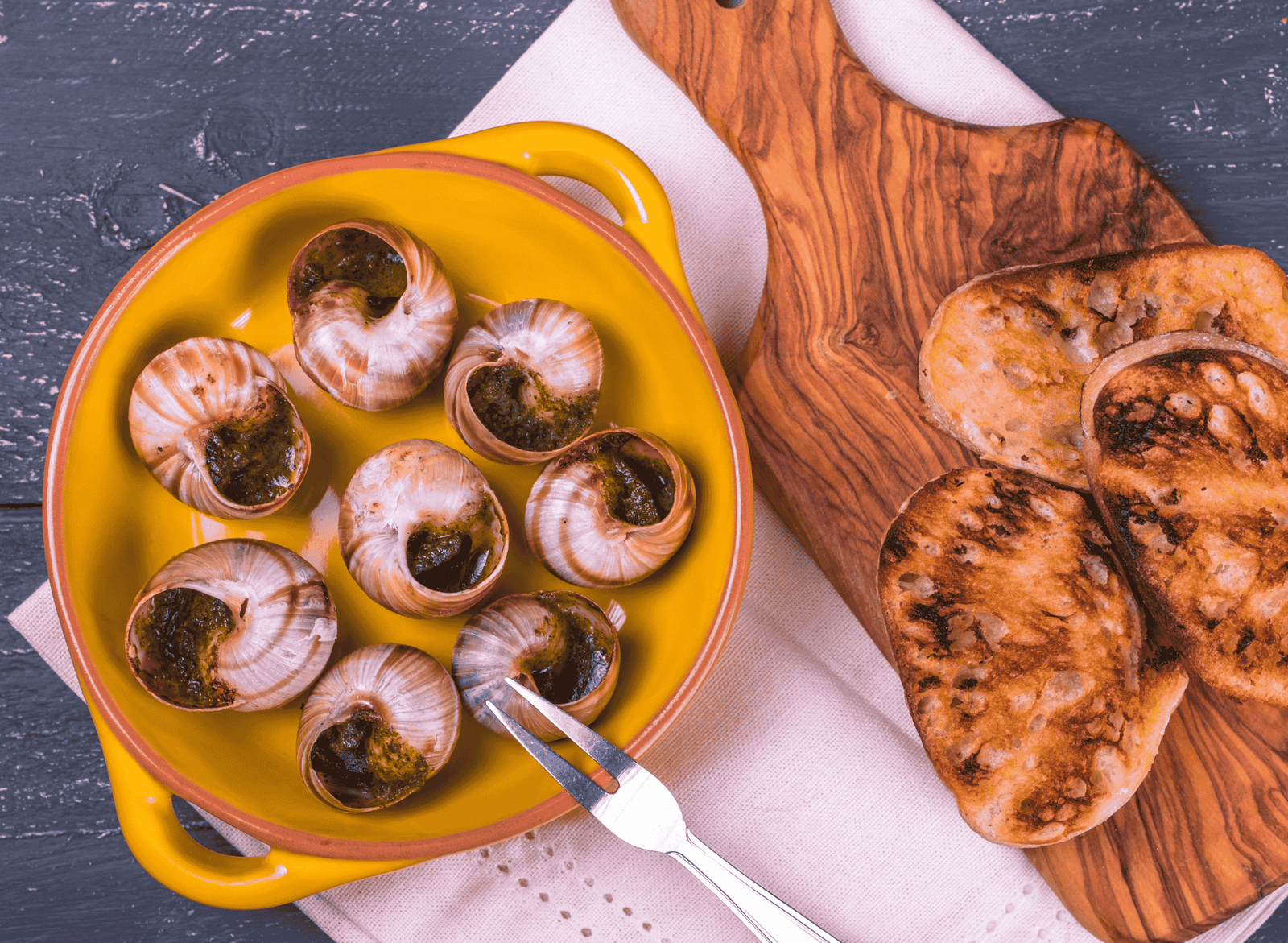
Escargot turns humble snails into a luxurious starter that’s surprisingly addictive. In Burgundy style, they bake in their shells swimming in parsley-garlic butter until bubbly and fragrant. The first time I tried them, the tender bite and rich sauce had me hooked — no slime, just pure garlic heaven. Don’t knock it till you try it; it’s a French rite of passage.
- Key Ingredients: Burgundy snails, unsalted butter, garlic, fresh parsley, shallots, salt, pepper.
- Origin: Burgundy, with roots going back centuries; the classic recipe dates to the early 1800s.
- How to Enjoy: Special snail tongs and fork; mop up every drop of butter with crusty bread.
- Wine Pairing: Chablis or a light white Burgundy.
- Home Tip: Buy pre-cleaned snails in cans; bake 10–12 minutes at 400°F.
- Why Everyone Needs It: It’s the ultimate conversation starter and far less scary than it sounds.

Foie Gras – Luxurious Liver Perfection
Foie Gras delivers silky, rich duck or goose liver that melts on the tongue. Served as terrine, seared, or in a mousse, it’s France’s most indulgent starter, often paired with sweet fig jam or toasted brioche. I first tasted it at a market in the Southwest and understood instantly why it’s saved for special occasions.
- Key Ingredients: Fattened duck or goose liver, salt, pepper, sometimes Armagnac.
- Origin: Southwest France (Gascony and Périgord), a tradition since Roman times.
- How to Enjoy: Chilled terrine with sweet wine or lightly seared with fruit.
- Wine Pairing: Sauternes or a late-harvest white.
- Home Tip: Source ethical producers; serve at room temperature for best texture.
- Why Everyone Needs It: Pure luxury in every bite — controversial for some, heavenly for most.
French Onion Soup – Comfort in a Bowl
French onion soup warms you from the inside with deeply caramelized onions in rich beef broth, topped with toasted bread and bubbling Gruyère. It’s the ultimate bistro classic that feels like a hug. On a chilly Paris evening, nothing beats breaking through that cheesy crust.
- Key Ingredients: Yellow onions, beef stock, thyme, bay leaf, baguette, Gruyère or Comté cheese.
- Origin: Paris, popular since the 18th century as a late-night or hangover cure.
- How to Enjoy: Straight from the oven in individual crocks.
- Wine Pairing: Light red like Beaujolais.
- Home Tip: Take your time caramelizing the onions — low and slow is key.
- Why Everyone Needs It: Simple ingredients, restaurant-worthy results.
Croque Monsieur – The Ultimate Toasted Sandwich
Croque Monsieur elevates the grilled cheese with ham, Gruyère, and creamy béchamel between buttery bread, then broiled until golden. Add a fried egg and it becomes Croque Madame. Parisian cafés serve it at any hour, and it’s always satisfying.
- Key Ingredients: White bread, ham, Gruyère, béchamel sauce, butter.
- Origin: Paris cafés in the early 1900s.
- How to Enjoy: With a green salad and beer or wine.
- Wine Pairing: Crisp white or light red.
- Home Tip: Make extra béchamel — it’s the secret to greatness.
- Why Everyone Needs It: Fancy comfort food at its best.
Quiche Lorraine – Savory Custard Magic
Quiche Lorraine combines flaky pastry with a silky custard of eggs, cream, and smoky lardons. It’s elegant enough for brunch yet hearty for lunch. I once devoured an entire slice standing at a market stall and felt zero regret.
- Key Ingredients: Shortcrust pastry, eggs, heavy cream, bacon or lardons, nutmeg.
- Origin: Lorraine region, originally without cheese (though many add it now).
- How to Enjoy: Warm with a simple salad.
- Wine Pairing: Alsace Riesling or Pinot Blanc.
- Home Tip: Blind-bake the crust to avoid sogginess.
- Why Everyone Needs It: Versatile, make-ahead perfection.

How to make French Quiche Lorraine – The Good Life France
Hearty Main Courses to Savor Slowly
These centerpiece dishes reward patience and showcase France’s love for slow cooking and bold flavors. They’re meant for long lunches or cozy dinners where seconds are encouraged.
Ratatouille – Summer on a Plate
Ratatouille brings together eggplant, zucchini, peppers, tomatoes, and herbs in a vibrant Provençal stew. Each vegetable shines when cooked separately then combined. The Pixar movie made it famous, but the real thing is even better.
- Key Ingredients: Eggplant, zucchini, bell peppers, tomatoes, onion, garlic, herbs de Provence.
- Origin: Provence, a peasant dish using garden bounty.
- How to Enjoy: As a side, main with bread, or cold the next day.
- Wine Pairing: Rosé from Provence.
- Home Tip: Don’t rush — proper ratatouille takes time.
- Why Everyone Needs It: Bright, healthy, and endlessly adaptable.
Boeuf Bourguignon – Burgundy’s Signature Stew
Boeuf Bourguignon simmers beef, mushrooms, pearl onions, and lardons in red wine until fork-tender. It tastes even better the next day. One snowy weekend in Burgundy, I ate it three times and still wanted more.
- Key Ingredients: Beef chuck, Burgundy wine, carrots, onions, mushrooms, bacon, bouquet garni.
- Origin: Burgundy, a classic peasant dish refined over centuries.
- How to Enjoy: With mashed potatoes or buttered noodles.
- Wine Pairing: The same Burgundy you cooked with.
- Home Tip: Use a heavy Dutch oven and don’t skimp on simmering time.
- Why Everyone Needs It: The ultimate comfort food.
:max_bytes(150000):strip_icc()/SES-classic-beef-bourguignon-recipe-7498352-step-16-fc657c2f9fcc42588c7ea30de37ad02b.jpg)
:max_bytes(150000):strip_icc()/SES-classic-beef-bourguignon-recipe-7498352-hero-A-f3d470b196ee4c97acb778bc068eec13.jpg)
Coq au Vin – Chicken Braised in Wine
Coq au Vin transforms chicken (traditionally tough rooster) into tender, wine-infused glory with bacon, mushrooms, and onions. It’s Burgundy’s other famous stew and equally soul-satisfying.
- Key Ingredients: Chicken, red wine, lardons, mushrooms, pearl onions, garlic.
- Origin: Burgundy, originally a way to tenderize old birds.
- How to Enjoy: With crusty bread to soak up the sauce.
- Wine Pairing: Pinot Noir.
- Home Tip: Chicken thighs work beautifully and cook faster.
- Why Everyone Needs It: Rich, elegant, and surprisingly easy.
Cassoulet – The Hearty Bean Casserole
Cassoulet layers white beans with duck confit, sausage, and pork, then bakes until the top forms a golden crust. It’s a Southwest French masterpiece that feeds a crowd.
- Key Ingredients: Tarbais beans, duck confit, Toulouse sausage, pork, garlic.
- Origin: Languedoc, with towns fiercely defending their versions.
- How to Enjoy: Straight from the cassole dish.
- Wine Pairing: Robust red from the region.
- Home Tip: Make ahead — it improves with time.
- Why Everyone Needs It: Ultimate winter warmer.
Bouillabaisse – Marseille’s Seafood Feast
Bouillabaisse is a fragrant fish stew with saffron, fennel, and multiple Mediterranean fish, served with rouille and toasted bread. Nothing tastes more like the sea.
- Key Ingredients: Assorted fish, saffron, tomatoes, fennel, garlic, orange zest.
- Origin: Marseille, once a fishermen’s meal.
- How to Enjoy: Broth first, then fish with rouille.
- Wine Pairing: Provençal rosé or white.
- Home Tip: Use the freshest seafood possible.
- Why Everyone Needs It: Coastal France in a bowl.
Confit de Canard – Duck Cooked in Its Own Fat
Confit de Canard slowly cooks duck legs in their own fat until meltingly tender, then crisps the skin. It’s the Southwest’s gift to the world.
- Key Ingredients: Duck legs, duck fat, garlic, thyme, salt.
- Origin: Gascony, an ancient preservation method.
- How to Enjoy: With lentils or fried potatoes.
- Wine Pairing: Cahors or Madiran.
- Home Tip: Store-bought confit is excellent and easy to crisp up.
- Why Everyone Needs It: Crispy skin, juicy meat — perfection.
Moules Marinière – Steamed Mussels in White Wine
Moules Marinière steams fresh mussels in white wine, shallots, garlic, and parsley. Simple, briny, and utterly addictive with fries on the side.
- Key Ingredients: Mussels, white wine, shallots, garlic, parsley, butter.
- Origin: Coastal France, especially Normandy and Brittany.
- How to Enjoy: With crusty bread or frites.
- Wine Pairing: Muscadet or beer.
- Home Tip: Discard any that don’t open.
- Why Everyone Needs It: Effortless yet impressive.
Steak Frites – Bistro Classic Done Right
Steak Frites pairs a perfectly seared steak (often hanger or ribeye) with golden fries and maybe béarnaise sauce. It’s the everyday hero of French brasseries.
- Key Ingredients: Good-quality steak, potatoes, butter, herbs.
- Origin: Ubiquitous in Parisian bistros.
- How to Enjoy: Medium-rare with a glass of red.
- Wine Pairing: Côtes du Rhône.
- Home Tip: Double-fry the potatoes for extra crispiness.
- Why Everyone Needs It: Timeless satisfaction.
Blanquette de Veau – Creamy Veal Stew
Blanquette de Veau gently simmers veal in a white wine and cream sauce with mushrooms and onions. It’s comforting, elegant, and wonderfully mild.
- Key Ingredients: Veal shoulder, white wine, cream, mushrooms, pearl onions.
- Origin: Classic French home cooking, popular nationwide.
- How to Enjoy: With rice or noodles.
- Wine Pairing: White Burgundy.
- Home Tip: Don’t let it boil once the cream is added.
- Why Everyone Needs It: Gentle flavors, big comfort.
Classic Sides and Accompaniments
No French meal is complete without the perfect side. These elevate everything they touch.
Gratin Dauphinois – Creamy Potato Heaven
Gratin Dauphinois layers thinly sliced potatoes with cream, garlic, and nutmeg, baked until golden and bubbling. Cheese is optional but delicious.
- Key Ingredients: Potatoes, heavy cream, garlic, nutmeg, butter.
- Origin: Dauphiné region.
- How to Enjoy: With roasted meats or as a main.
- Wine Pairing: Any red or white.
- Home Tip: Use a mandoline for even slices.
- Why Everyone Needs It: Potatoes never tasted so luxurious.
Sweet Endings: Iconic French Desserts
French desserts are pure poetry — light, elegant, and just sweet enough.
Crêpes – Versatile Thin Pancakes
Crêpes are paper-thin pancakes that can be sweet (Nutella, lemon-sugar) or savory (ham and cheese). From Brittany street stands to fancy tableside flambé.
- Key Ingredients: Flour, eggs, milk, butter; fillings vary.
- Origin: Brittany, with buckwheat galettes for savory.
- How to Enjoy: Fresh and hot.
- Wine Pairing: Sweet cider for savory, dessert wine for sweet.
- Home Tip: Let the batter rest for tender results.
- Why Everyone Needs It: Fun, customizable, always welcome.
Soufflé – Airy and Dramatic
Soufflé rises dramatically in the oven, whether cheese or chocolate. The moment it hits the table, everyone oohs and aahs.
- Key Ingredients: Eggs, milk or chocolate, flavor base.
- Origin: 18th-century France.
- How to Enjoy: Immediately before it deflates.
- Wine Pairing: Champagne or sweet wine.
- Home Tip: Room-temperature eggs and no slamming doors.
- Why Everyone Needs It: Pure theater and delight.
Crème Brûlée – Crackly Caramel Dream
Crème Brûlée features silky vanilla custard under a shatteringly crisp caramel top. Tap it with your spoon and smile.
- Key Ingredients: Cream, egg yolks, sugar, vanilla bean.
- Origin: France, possibly 17th century.
- How to Enjoy: Slightly warm or chilled.
- Wine Pairing: Sauternes.
- Home Tip: Use a kitchen torch for the best crust.
- Why Everyone Needs It: The most satisfying crack in dessert history.

Creme Brulee
Tarte Tatin – Upside-Down Apple Magic
Tarte Tatin caramelizes apples in butter and sugar, then bakes them under pastry and flips for a glossy, sticky topping. Accidentally invented by the Tatin sisters.
- Key Ingredients: Apples, butter, sugar, puff pastry.
- Origin: Hôtel Tatin in the 1880s.
- How to Enjoy: Warm with crème fraîche.
- Wine Pairing: Sweet cider or late-harvest wine.
- Home Tip: Use firm apples like Golden Delicious.
- Why Everyone Needs It: Caramelized perfection.
Macarons – Colorful Almond Delights
Macarons are delicate meringue shells sandwiching creamy fillings in every flavor imaginable. They’re Paris’s prettiest edible souvenirs.
- Key Ingredients: Almond flour, egg whites, sugar, fillings (ganache, buttercream).
- Origin: Italy via Catherine de Medici, perfected in Paris.
- How to Enjoy: With tea or coffee.
- Wine Pairing: Light sparkling wine.
- Home Tip: Age the egg whites and weigh everything precisely.
- Why Everyone Needs It: Bite-sized elegance.
20 Classic French Dishes at a Glance
| # | Dish | Region | Type | Why It’s Essential |
|---|---|---|---|---|
| 1 | Escargot | Burgundy | Starter | Bold garlic butter experience |
| 2 | Foie Gras | Southwest | Starter | Ultimate luxury |
| 3 | French Onion Soup | Paris | Starter | Comfort in every spoonful |
| 4 | Croque Monsieur | Paris | Starter/Main | Elevated grilled cheese |
| 5 | Quiche Lorraine | Lorraine | Starter/Main | Silky savory custard |
| 6 | Ratatouille | Provence | Main/Veg | Garden-fresh vibrancy |
| 7 | Boeuf Bourguignon | Burgundy | Main | Rich wine-braised beef |
| 8 | Coq au Vin | Burgundy | Main | Tender chicken in red wine |
| 9 | Cassoulet | Languedoc | Main | Hearty bean-and-meat casserole |
| 10 | Bouillabaisse | Marseille | Main | Saffron seafood stew |
| 11 | Confit de Canard | Southwest | Main | Crispy, tender duck |
| 12 | Moules Marinière | Coast | Main | Briny mussels in wine |
| 13 | Steak Frites | Nationwide | Main | Bistro perfection |
| 14 | Blanquette de Veau | Nationwide | Main | Creamy veal comfort |
| 15 | Gratin Dauphinois | Dauphiné | Side | Creamy potato layers |
| 16 | Crêpes | Brittany | Dessert | Sweet or savory versatility |
| 17 | Soufflé | Nationwide | Dessert | Dramatic rise and lightness |
| 18 | Crème Brûlée | Nationwide | Dessert | Caramel crack satisfaction |
| 19 | Tarte Tatin | Nationwide | Dessert | Caramelized apple upside-down |
| 20 | Macarons | Paris | Dessert | Elegant almond bites |
Comparing France’s Legendary Stews
Boeuf Bourguignon vs Coq au Vin vs Cassoulet vs Blanquette de Veau — all use wine and slow cooking, yet each shines differently. Beef is deep and earthy, chicken brighter, cassoulet bean-rich and rustic, blanquette creamy and mild. Try them all to see which becomes your favorite.
Regional Flavors That Define These Dishes
France’s regions shape every bite. Burgundy loves red wine and slow braises. Provence brings sunshine and herbs. The Southwest obsesses over duck and beans. Brittany keeps it simple and buttery. Eating regionally is the best way to understand why these classics endure.
Pairing French Dishes with Wines
Match like the French do: light whites with seafood and starters, robust reds with beef and stews, sweet wines with foie gras or desserts. A good rule — drink what grows nearby. It almost always works.
Tips for Trying French Food Like a True Local
Eat slowly. Share plates. Ask for the house wine. Never rush the cheese course. In restaurants, say “bon appétit” and linger. At home, buy the best butter and bread you can find. And always have seconds.
What People Are Asking About Classic French Dishes
What is France’s most famous dish? Boeuf Bourguignon often takes the crown, but opinions vary by region — cassoulet in the south, bouillabaisse on the coast.
Is French food hard to cook at home? Not at all. Many classics use one pot or simple techniques. Start with onion soup or crêpes and work up to soufflé.
Where should I try authentic versions? Bistros in Paris for onion soup and steak frites, Lyon bouchons for quenelles and sausages, Marseille ports for bouillabaisse, and Southwest markets for confit and cassoulet.
Is French cuisine only rich and heavy? No — ratatouille, salade niçoise, and crêpes prove it can be light and vegetable-forward too.
Can vegetarians enjoy these dishes? Absolutely. Ratatouille, quiche (without lardons), onion soup, and many desserts are naturally vegetarian or easily adapted.
FAQ
What makes French food so special compared to other cuisines? Technique, respect for ingredients, and the culture of taking time to enjoy every bite set it apart.
Are these dishes expensive to make? Many use affordable cuts and pantry staples. Duck confit and foie gras cost more, but most others are budget-friendly when made at home.
How do I store leftovers? Stews and cassoulet improve after a day in the fridge. Soufflés and crêpes are best fresh.
Can I find these dishes outside France? Yes, good French restaurants worldwide serve them, but nothing beats the real thing on home soil.
What’s the best way to start exploring French cooking? Master the mother sauces (béchamel, hollandaise) and practice one dish a week. You’ll be hooked in no time.
French food isn’t about perfection on the plate — it’s about pleasure, connection, and remembering that life is better when you slow down and savor. Cook one of these dishes this weekend, pour a glass of wine, and raise a toast to France. Bon appétit — may your kitchen smell like garlic and butter forever.