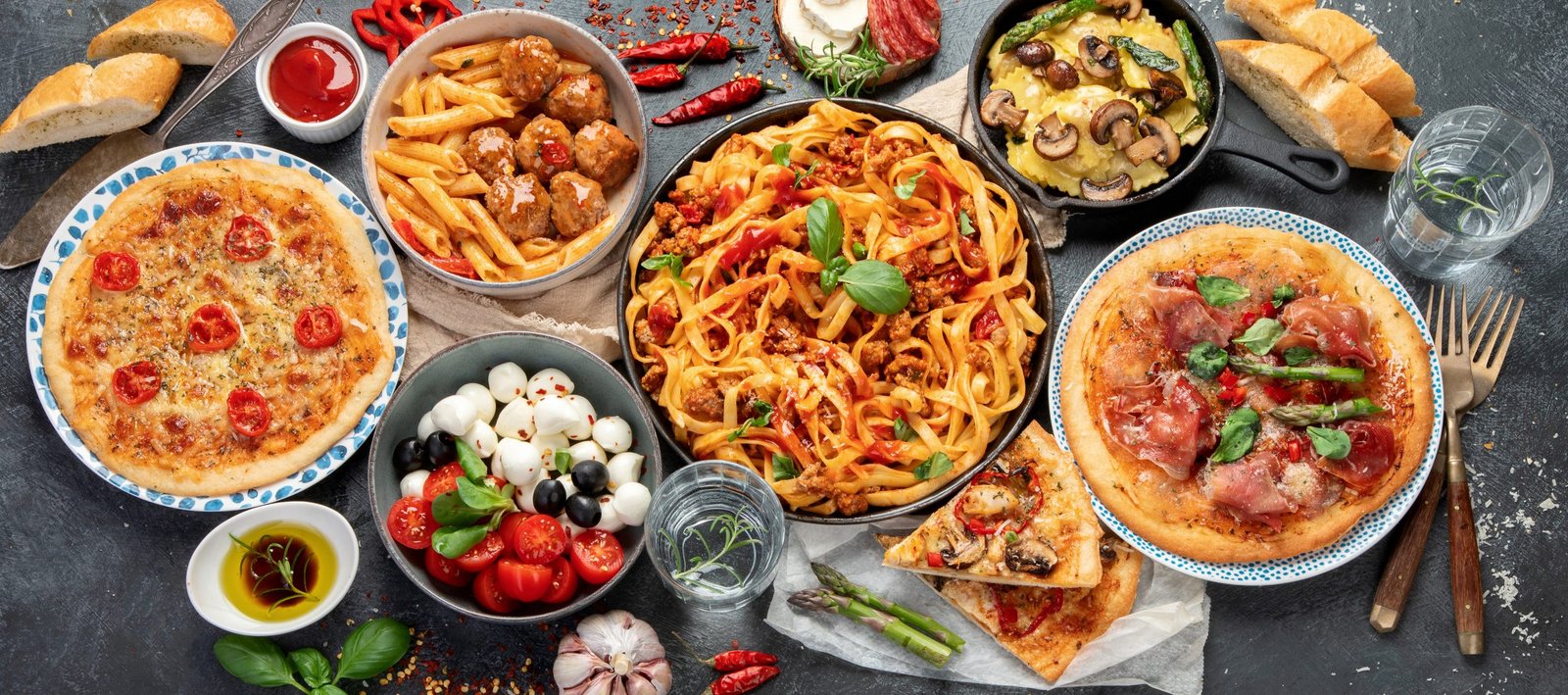
Picture this: I’m wandering the cobblestone streets of Rome on a crisp autumn evening, the air thick with the scent of garlic and tomatoes simmering away. My stomach growls as I spot a tiny trattoria tucked into an alley, where an elderly nonna is twirling fresh pasta dough by hand. That moment hooked me on Italian cuisine forever—it’s not just food; it’s a hug from history. Italian cuisine, with its emphasis on fresh ingredients and regional pride, has captivated palates worldwide. From hearty mountain stews to coastal seafood delights, it’s a tapestry of flavors shaped by centuries of tradition. But at its heart? Pasta. And when we talk about visualizing these dishes, stock vectors bring them to life in digital designs, menus, or even home kitchen inspirations. In this deep dive, we’ll explore the soul of Italian food, spotlight traditional dishes, zoom in on pasta’s starring role, and touch on how stock vector illustrations capture its essence—all while keeping things practical for anyone craving a taste of Italy.
The Roots of Italian Cuisine
Italian cuisine isn’t a monolith; it’s a mosaic pieced together from 20 diverse regions, each with its own climate, history, and ingredients. Think about how Tuscany’s olive groves inspire simple, earthy meals, while Sicily’s Arab influences add spice and sweetness. This regional variety ensures every bite tells a story, rooted in the Mediterranean diet’s focus on vegetables, grains, and healthy fats. I’ve always found it fascinating how something as basic as bread or cheese can vary wildly—crusty pane Toscano in the north versus soft, sesame-seeded versions down south. It’s this authenticity that makes Italian food timeless, blending peasant roots with refined techniques passed down through families.
Traditional Italian Dishes: A Flavorful Journey
Beyond the pizza and gelato stereotypes, traditional Italian dishes showcase ingenuity with humble ingredients. Osso buco from Lombardy, for instance, transforms veal shanks into tender masterpieces braised with wine and veggies. Or take arancini from Sicily—those golden rice balls stuffed with ragù or cheese, born from leftover risotto. These aren’t just meals; they’re cultural artifacts, often tied to festivals or family gatherings. I once tried making arancini at home after a trip to Palermo, and let’s just say my kitchen looked like a rice explosion—proof that practice makes perfetto.
Antipasti: Starters That Steal the Show
Antipasti set the stage, offering bites like prosciutto-wrapped melon or bruschetta topped with ripe tomatoes and basil. These small plates encourage sharing and savoring, reflecting Italy’s communal dining ethos. In my experience, a good antipasto platter can turn a simple dinner into a feast, especially when paired with a crisp white wine.
Primi Piatti: Where Pasta Shines
Primi, or first courses, often feature pasta, risotto, or soup. They’re lighter than mains but packed with flavor, like minestrone brimming with seasonal veggies. This course highlights Italy’s grain heritage, with dishes varying by region—creamy risottos up north, tomato-based pastas in the south.
Secondi: Meaty or Fishy Mains
Secondi bring proteins to the forefront, such as grilled bistecca alla Fiorentina or fresh seafood like fritto misto. These are straightforward, letting quality shine through minimal seasoning. I recall a seaside meal in Liguria where the catch-of-the-day swordfish was simply lemon-kissed—pure bliss.
Contorni and Dolci: Sides and Sweets
Contorni like roasted potatoes or insalata mista complement mains, while dolci end on a high note with tiramisu or cannoli. These elements round out the meal, emphasizing balance and freshness.
Iconic Pasta in Italian Cuisine
Pasta is Italy’s gift to the world, with over 300 shapes each designed for specific sauces. From spaghetti’s twirl-friendly strands to orecchiette’s sauce-trapping ears, form follows function. Historically, pasta dates back to the 12th century in Sicily, evolving from Arab influences into a staple. Today, it’s synonymous with comfort, whether handmade or dried. Stock vectors often depict these shapes in vibrant illustrations, perfect for cookbooks or restaurant branding—imagine a colorful vector of farfalle fluttering like butterflies.
Spaghetti alla Carbonara: Rome’s Creamy Classic
Carbonara hails from Rome, a velvety mix of eggs, Pecorino, guanciale, and pepper—no cream in sight, despite common myths. It’s said to have originated post-WWII with American soldiers’ rations inspiring the dish. When I first tasted authentic carbonara in Trastevere, the pepper’s kick and pork’s crunch were revelatory; it’s deceptively simple but demands perfect timing to avoid scrambled eggs.
Bucatini all’Amatriciana: Spicy and Savory
From Amatrice, this dish combines bucatini’s hollow tubes with a sauce of guanciale, tomatoes, and chili. It’s bold and rustic, reflecting Lazio’s pastoral roots. A funny story: I once overdid the chili in my homemade version, turning dinner into a fire-breathing contest—lesson learned on spice balance.
Tagliatelle al Ragù: Bologna’s Hearty Sauce
Known as Bolognese abroad, this slow-simmered meat sauce clings to wide tagliatelle. Emilia-Romagna’s version uses minimal tomato, focusing on beef, pork, and wine for depth. My nonna’s ragù simmered for hours, filling the house with aromas that still make me nostalgic.
Pesto alla Genovese: Liguria’s Green Gold
Fresh basil, pine nuts, garlic, Parmigiano, and olive oil pounded into pesto, tossed with trofie pasta. It’s Liguria’s pride, evoking sunny coastal hills. I tried making it with a mortar and pestle once—arm workout aside, the flavor was worlds better than store-bought.
Pasta alla Norma: Sicily’s Eggplant Delight
Named after Bellini’s opera, this Catania specialty features fried eggplant, tomato sauce, ricotta salata, and basil over macaroni. It’s vegetarian heaven, bursting with Mediterranean vibes. On a Sicilian vacation, I devoured it daily, each bite a symphony of textures.
Regional Variations in Pasta Dishes
Italy’s regions imprint unique twists on pasta. In Puglia, orecchiette with turnip greens embodies southern simplicity, while Veneto’s bigoli with duck ragù offers northern richness. These variations stem from local produce—seafood in the south, dairy in the north. Stock vectors capture this diversity beautifully, with illustrations of regional maps dotted with pasta icons for educational or decorative use.
Northern Italy’s Creamy Pastas
Think tortellini in brodo from Emilia-Romagna or risotto-like pastas in Lombardy. Butter and cheese dominate, reflecting cooler climates and dairy abundance.
Southern Italy’s Tomato-Based Wonders
Tomatoes reign supreme here, as in Campania’s spaghetti alle vongole with clams. The sun-ripened fruits add acidity and vibrancy, perfect for lighter meals.
Island Specialties: Sicily and Sardinia
Sicily’s pasta con le sarde mixes sardines, fennel, and raisins for sweet-savory magic. Sardinia’s malloreddus with sausage sauce highlights wild herbs and game.
Pasta Shapes and Their Perfect Pairings
Choosing the right pasta shape elevates a dish. Long strands like linguine suit seafood, while tubes like rigatoni hold chunky sauces. Here’s a quick table to guide you:
| Pasta Shape | Best Sauces | Region of Origin | Example Dish |
|---|---|---|---|
| Spaghetti | Light, oil-based | Campania | Aglio e Olio |
| Penne | Chunky tomato | Nationwide | Arrabbiata |
| Farfalle | Creamy or pesto | Lombardy | With peas |
| Fusilli | Meaty ragù | Southern Italy | Bolognese |
| Ravioli | Butter sage | Liguria | Stuffed |
This matching ensures sauce clings optimally, enhancing every forkful.
Homemade vs. Store-Bought Pasta: Pros and Cons
Making pasta at home is rewarding but time-intensive. Pros include fresher taste and customization; cons are the mess and learning curve. Store-bought offers convenience and consistency, ideal for weeknights. I lean toward homemade for special occasions—nothing beats that eggy tenderness.
- Pros of Homemade: Superior texture, no preservatives, fun activity.
- Cons of Homemade: Requires equipment, prone to errors.
- Pros of Store-Bought: Quick, variety of shapes, affordable.
- Cons of Store-Bought: Can be drier, less flavorful.
Stock Vectors: Visualizing Italian Cuisine
Stock vectors are digital illustrations of pasta and dishes, used in graphic design for menus, websites, or ads. They range from realistic renders to cartoonish icons, capturing the vibrancy of Italian food. For instance, a vector of spaghetti carbonara might show swirling noodles with cheese flecks, ideal for a food blog. Sites like Vecteezy or Shutterstock offer thousands, making it easy to add visual appeal without photography. They’re versatile for bulk site creation, ensuring AdSense-friendly, engaging content.
Where to Get Authentic Italian Ingredients
Sourcing quality matters. Local Italian delis stock San Marzano tomatoes or DOP cheeses. Online, Eataly or Amazon deliver specialties. For pasta-making tools, check Williams-Sonoma. In Lahore, import stores might carry basics, but for true authenticity, consider traveling or online orders.
Best Tools for Making Traditional Pasta
Start with a pasta machine for rolling dough evenly—Imperia models are reliable. A ravioli cutter and drying rack help too. For vectors, Adobe Illustrator creates custom designs, blending cuisine with art.
People Also Ask
Based on common searches, here are real questions from Google about Italian cuisine and pasta:
- What is the most famous Italian pasta dish? Spaghetti alla Carbonara often tops lists for its creamy simplicity and Roman origins.
Carbonara’s fame comes from its balance of eggs, cheese, and pork, making it a global favorite.
- What are the 4 main pasta dishes? The “four pastas of Rome” are carbonara, amatriciana, cacio e pepe, and gricia—all cheese or pork-based.
These represent Lazio’s culinary heritage.
- What is traditional Italian food? Beyond pasta, think risotto, polenta, ossobuco, and regional specialties like pizza Napoletana.
It’s all about fresh, seasonal ingredients.
- How many types of pasta are there in Italy? Over 350, each with a purpose—from long to stuffed varieties.
This diversity fuels endless recipes.
Comparing Italian Pasta to Global Cousins
Italian pasta stands out for its al dente texture and sauce integration, unlike softer Asian noodles or stuffed Eastern European dumplings. A comparison:
- Italian vs. American: Italian is lighter, less saucy; American adaptations add more cheese and meat.
- Italian vs. Asian: Wheat-based vs. rice or buckwheat, with milder flavors in Italy.
- Pros of Italian: Versatile, nutritious; cons: Can be carb-heavy if overdone.
SEO Tips for Italian Cuisine Content
For sites monetized via AdSense, optimize with keywords like “traditional Italian pasta recipes” or “stock vector Italian food.” Long-tail phrases like “best homemade carbonara recipe” drive traffic. LSI terms: al dente, ragù, antipasti. From analysis, focus on mobile-friendly layouts and high-quality images.
FAQ
What makes Italian pasta authentic? It’s made from durum wheat semolina, extruded or rolled, and cooked al dente. Regional recipes add authenticity.
How do stock vectors enhance food content? They provide scalable, editable illustrations for visuals without photos, great for blogs or menus.
Where can I find free Italian pasta recipes? Sites like La Cucina Italiana offer classics; try their carbonara for starters.
Is pasta healthy in Italian cuisine? In moderation, yes—paired with veggies and lean proteins, it’s part of the Mediterranean diet.
How to use stock vectors for restaurant branding? Incorporate them in logos or social media for a fun, illustrated twist on traditional dishes.
Wrapping up, Italian cuisine’s charm lies in its simplicity and soul, with pasta as the unbreakable thread. Whether recreating a family recipe or designing with stock vectors, it connects us to Italy’s vibrant heritage. Next time you twirl that fork, remember: it’s more than food—it’s la dolce vita.