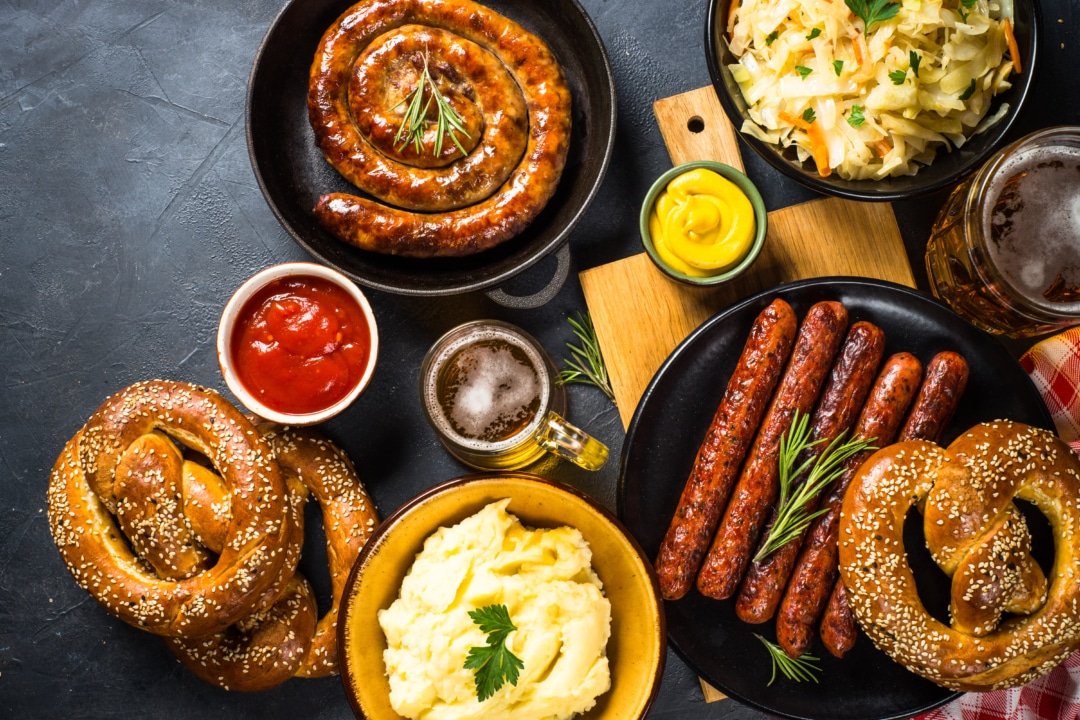
German food isn’t just about hefty portions of sausage and sauerkraut—though those are undeniably part of the story. It’s a cuisine shaped by tough winters, fertile plains, mountain valleys, and a history of fragmentation into tiny states that only unified late in the game. Growing up hearing stories from my German grandmother about her childhood in the Black Forest, where every meal revolved around what the land and seasons allowed, made me realize how deeply tied German eating habits are to survival, trade, and regional pride. What started as simple, hearty fare has evolved into something far more varied and sophisticated, especially in recent decades.
The Ancient Roots: Prehistoric to Roman Influences
German cuisine traces back to prehistoric times when Germanic tribes relied on what the short growing seasons offered: barley, wheat, oats, and rye for bread and porridge, plus livestock for meat and dairy. Food was basic—think bland grains and pasture-raised animals—with preservation methods like smoking and salting born out of necessity for long winters.
The Romans changed things around the 1st century AD. They brought fruit trees, grapevines for wine, and new spices like parsley, celery, and dill that remain staples today. Trade routes opened up, letting Germanic tribes exchange goods with Mediterranean cultures, adding layers to early diets.
Key early influences:
- Grains → Foundation of bread culture (still over 3,000 varieties in Germany).
- Romans → Introduced viticulture and orchards.
- Preservation → Salting, smoking, pickling—techniques that define classics like sauerkraut.
Medieval Period: Monasteries, Trade, and Courtly Refinement
During the Middle Ages, monasteries played a huge role in refining German food. Monks brewed beer (Weihenstephan Abbey claims the world’s oldest continuously operating brewery since 1040) and perfected sausage-making under strict purity laws from the 13th century onward. Spices like cinnamon and cloves appeared via trade, creating sweet-sour sauces that were far more complex than today’s milder fare.
Regional differences solidified here. Northern coastal areas leaned on fish and rye, while southern mountains favored pork and dumplings. The Holy Roman Empire’s patchwork of principalities meant no single “German” cuisine—each area developed its own.
One funny note: medieval German feasts could get wild with spiced sauces that modern palates might find overwhelming. Over time, those bold flavors faded, replaced by simpler, fat-based ones—some say due to changing trade and chemistry in the 17th century.
The Potato Revolution and Enlightenment Era
Few foods transformed German tables like the potato. Introduced in the 16th century from the Americas, it took hold slowly until Frederick the Great in the 18th century forced Prussians to plant it (legend has it he planted fields guarded by soldiers to spark curiosity). Potatoes became a staple, cheap and filling, fitting the frugal Prussian ethos.
This era saw cookbooks like Henriette Davidis’s 1845 classic standardize home cooking for the rising middle class, emphasizing practicality.
Comparison: Pre- and Post-Potato Era
- Before → Heavy on grains, preserved meats, seasonal veggies.
- After → Potatoes in everything: boiled, fried, in stews, as sides—still central today.
19th Century to World Wars: Industrialization and Hardship
Unification in 1871 brought some blending, but regional identities held strong. Industrialization urbanized populations, leading to reliance on processed foods and sausages as quick meals.
The world wars hit hard. Post-WWII scarcity in the 1940s meant rationing and creativity—think “Trümmerfrauen” (rubble women) making do with limited ingredients. The Wirtschaftswunder (economic miracle) of the 1950s flipped this, flooding markets with abundance and introducing global influences.
Currywurst emerged in 1949 Berlin when Herta Heuwer mixed British curry powder with ketchup for a cheap street food—now an icon of post-war ingenuity.
Regional Diversity: North vs. South, East vs. West
Germany’s federal history means cuisine varies wildly by region—more like separate countries than one unified style.
Northern Germany (coastal, Baltic/ North Sea influence):
- Seafood-heavy: pickled herring (Rollmops), fish stews.
- Rye bread dominant.
- Hearty but lighter on spices.
Southern Germany (Bavaria, Swabia):
- Pork, dumplings (Knödel), pretzels.
- Weißwurst, pretzels, and beer-focused.
- Austrian/Swiss crossover.
Eastern Germany (post-war influence):
- Simpler due to scarcity: Soljanka soup, hearty stews.
- More resourceful dishes.
Western (Rhine area):
- French touches: refined sauces, wines.
Here’s a quick regional comparison table:
| Region | Signature Ingredients | Famous Dishes | Influences |
|---|---|---|---|
| North | Fish, rye, potatoes | Labskaus, Rollmops | Scandinavian, maritime |
| South (Bavaria) | Pork, wheat dumplings | Weißwurst, Schweinshaxe | Austrian, alpine |
| East | Cabbage, potatoes, pork | Eisbein, Sauerbraten variants | Slavic, post-war frugality |
| West (Rhine) | Wine, asparagus, game | Rheinischer Sauerbraten | French, Roman legacy |
Iconic Dishes and Their Stories
- Bratwurst → Over 1,500 sausage varieties; Nürnberger small and spiced.
- Sauerbraten → Marinated roast, often called the national dish.
- Schnitzel → Breaded cutlet, pork version hugely popular.
- Pretzels → Laugenbrezeln, lye-dipped for that crust.
- Black Forest Cake → Schwarzwälder Kirschtorte, cherries and kirsch from the region.
Pros of German classics:
- Filling and comforting—perfect for cold weather.
- High-quality ingredients, strict regulations (e.g., sausage purity).
- Versatile: street food to fine dining.
Cons:
- Can feel heavy or fatty to lighter eaters.
- Limited spice variety compared to Asian or Indian cuisines.
Modern German Food: Fusion and Revival
Today, German cuisine blends tradition with global twists. Berlin’s street food scene mixes döner (Turkish influence) with currywurst. Michelin-starred spots elevate classics like Käsespätzle into gourmet experiences.
Immigration since the 1950s brought Italian, Turkish, and Asian elements—now everyday. Vegetarian/vegan options boom, with modern takes on old recipes.
Where to experience it: Oktoberfest for Bavarian vibes, Christmas markets for gingerbread and mulled wine, or local Gasthäuser for authentic regional fare.
People Also Ask (PAA) Section
What is traditional German food?
Hearty, meat-centric dishes like sausages, schnitzel, sauerkraut, and potatoes, with huge regional variations—sausages in the south, seafood in the north.
How has German cuisine changed over time?
From bland prehistoric fare to Roman introductions, medieval spice use, potato dominance in the 1700s, post-war scarcity, and modern global fusion.
What is the most famous German dish?
Bratwurst or schnitzel often top lists, but sauerbraten holds “national dish” status in many views.
Is German food healthy?
Traditionally heavy, but modern versions incorporate more veggies; high in protein and fermented foods like sauerkraut (gut-friendly).
What influenced German cuisine?
Romans (fruits/vines), neighbors (Austria, France, Poland), trade, and necessity from harsh climates.
FAQ
What are the main ingredients in German cooking?
Pork, potatoes, cabbage, bread, sausages, and beer—plus regional twists like fish up north or dumplings south.
Why is German food so regional?
Germany unified late (1871); before that, independent states developed unique traditions based on local geography and history.
Is beer part of German food history?
Absolutely—the purity law (Reinheitsgebot) from 1516 still influences brewing; beer dates back to monastic production in the Middle Ages.
How did potatoes become so important?
Frederick the Great promoted them in the 1700s for their reliability during famines and wars.
Where can I try authentic German food outside Germany?
German beer halls worldwide, or cities with strong immigrant communities like Chicago or Milwaukee in the US.
German food tells a story of resilience—from ancient grains to post-war reinvention. Next time you bite into a bratwurst or sip a crisp lager, remember it’s more than a meal; it’s centuries of history on a plate. If you’ve got a favorite regional dish or memory, I’d love to hear it—nothing beats sharing stories over good food.